Reclaiming Odoo Gold Partner: Xapiens Bringing deeper understanding and expertise for the user 
April 17, 2026

Reclaiming Odoo Gold Partner: Xapiens Bringing deeper understanding and expertise for the user 

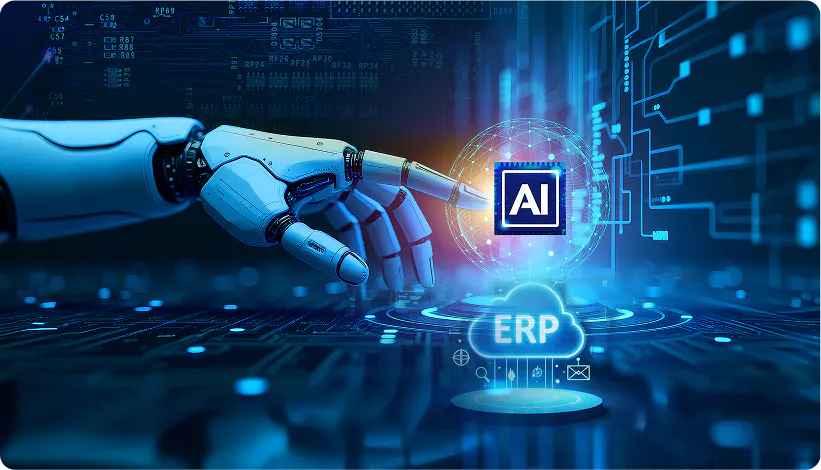
In todays organizations, we often hear “fragmented IT system”, where department and business function used different system and the data not connected to each other. For example, when the finance team using manual system, procurement using spreadsheets, site team using third-party tools, and sales using another different CRM system. This is what makes business become inefficient and slowly killing the productivity.      That’s when the ERP solution plays a role. ERP helps business overcome this “fragmented IT system” with single-source-of-truth solution. Workflow can be as simple as, for example, the site team could request a part needed for operational which automatically update the inventory system, finance approve the budget, and trigger order for procurement. It removes “human error” factors, increase the productivity and efficiency, while also added real-time visibility.     In 2026, Xapiens has back in the game by re-claiming our positioning in ERP industry as one of Odoo Gold Partner in Indonesia. Back in 2024, We are not only part Gold Partner, but also was nominated as the best Odoo partner in Asia Pacific (APAC) Region. These wasn’t just about hitting the target, but also but also bringing deeper understanding and bigger impact on what the user really needs.     By reaching Gold Partner status, we achieved certain criteria such as number of certified Expert within our team and enterprise users that we has developed. Which has given us not just a badge, but also wide range experience and expertise in delivering Odoo enterprise according to our user needs. That’s why being gold partner not only benefits us, but also our clients.     To learn more about how we implement our ERP system and other capabilities, visit our website at www.xapiens.id and let’s build your resilience together. 

Anywhere, Anytime: Enabling Seamless Teamwork and Collaboration in Remote Area Through Unified Network Communication Systems 
February 24, 2026

Anywhere, Anytime: Enabling Seamless Teamwork and Collaboration in Remote Area Through Unified Network Communication Systems 

In the past few years, the way companies operate has changed significantly. One of the biggest gamechanger is the digital acceleration and rapid technology adoption. Where businesses can become more versatile in teamwork and collaboration, as in certain occasions, doesn’t have to require physical interactions. The ability to work anywhere and anytime has become lot easier, which helps with improved work flexibility, employee satisfaction, and in some ways, bringing more operational efficiency.      These benefits could heavily impact companies who have sites and remote locations as part of their operations such as mining, or logistics. As they often faced more challenges in maintaining their teamwork and collaboration more seamless. Serious challenges companies could face:  Unstable remote access and disruptions  Increased cyber security risks  Fragmented communication tools that lead to inefficiency  Delays in decision-making due to poor connectivity  For employees to be able to access company systems from different sites and locations, proper network infrastructure and secure connectivity are needed. In many cases, the issues are not caused by people, but by the lack of stable IT infrastructure, secure network systems, and communication links supporting them.      Establishing secure and well-designed networks ensures that workers can access applications, data, and systems seamlessly without any disruptions even the remote locations where certain access can be limited. While at the same time, being responsible in protecting the business from any security threats. IT teams could create a safer and more controlled working environment if they have visibility on performance monitoring and anomaly detection.     At the same time, communication systems also play an important role. Integrated platforms such as voice and instant messaging, radio link and communications, video and audio conferencing, could help both office employees and on-site workers (both in office or in remote area) communicate in real time, share information quickly, and coordinate more effectively across departments and locations. Even though they are in separate places or even different time zones.     At the end of the day, enabling seamless collaboration across locations, working anywhere and anytime, is not solely about relying on connectivity, but also building a digital foundation for business to run well, no matter what the limitations.  A secure and well-built network and communication system does more than connect people. They help companies become more agile in their collaboration, protect the assets, and support sustainable growth. 

Reliable IT Infrastructure, Network and Communication Systems:
The Backbones of Smart Operations
January 20, 2026

Reliable IT Infrastructure, Network and Communication Systems: The Backbones of Smart Operations

In today’s competitive and fast-changing business landscape, organizations are required to adapt quickly and operate more efficiently. One way to improve efficiency and productivity to the next level is through smart operations. Deloitte, on their website, explained that smart-er operations means utilizing digital capabilities such as AI, IoT, and cloud to drive higher performance outcomes. It helped organizations in facing their most persistence challenges in operations and unlock opportunity to grow.   However organization sometimes struggle or even failed to maintain smart operations from running smoothly. As this technology needs well-built IT infrastructure along with stable and secure connections, issues such as network trouble/downtime, hardware failures, and security vulnerabilities could lead to operational and communication inefficiency.  As long as businesses do not have proper infrastructure and network installed, smart operations will never reach their full potential.   Stable connectivity and communication system ensures applications, infrastructure, and devices run without disruption while high performance networks could support all the surrounding environments. Either it’s cloud applications and platform, IoT devices, enterprise systems, or cyber security measures to protect operational data and critical systems.  That’s why reliable infrastructure and network plays crucial roles, not just smart operation, but also the core operation itself.   Xapiens are not only capable in implementing Infrastructure, network, and communication systems, but also delivering end-to-end ICT solutions according to client’s unique business operation.  As we have experience in becoming digital enabler of Indika Energy Group and its subsidiary.  Handling both on-premises and cloud, from designing, building, to implementation, while making sure network runs without any disruption through network assessment, support, and managed service solutions. Want to know more about Xapiens Infrastructure, Network, and Communication solutions? Contact us Today References https://www.deloitte.com/us/en/services/consulting/articles/smart-operations-industrial-revolution-4.html

Cyber Defense Center:  Next Generation SOC, the Future of Enterprise Cyber Security
January 9, 2026

Cyber Defense Center:  Next Generation SOC, the Future of Enterprise Cyber Security

In the dynamic landscape of cyber security, where threats are becoming more diverse and complex, the need for strong cyber defense has become more critical than ever. Relying solely on passive cyber security measures is no longer enough. Organizations must adopt adaptive and proactive approaches to protect their digital assets better. One solution that addresses this challenge is Cyber Defense Center (CDC). To explore what a Cyber Defense Center is and how it benefits enterprise security, we spoke with Wahyu Eko Putro, Cyber Security Expert and Solution Architect at Xapiens, with over 15 years of experience in the cyber security field.   What Is a CDC in the Context of Cyber Security? CDC stands for Cyber Defense Center. Simply put, it can be described as beyond SOC or the next generation of SOC. In a traditional Security Operations Center (SOC), the focus is typically on people, processes, and technology that monitor or conduct security surveillance of organizational assets. CDC takes this concept one step further. Not only monitors threats, CDC also builds a more comprehensive, adaptive, and resilient cyber defense capability. A capability that are ready to face next-generation cyber threats.   Why Is CDC Considered the Next Generation of SOC? For many users or clients, SOCs are often perceived has too passive approaches. Their role is usually limited to monitoring and issuing recommendations when cyberattack occurs. While this looks good on paper, in practice it often becomes problematic, especially when facing new types of cyberattacks with threat models that we have never seen before. CDC goes beyond passive monitoring. It introduces proactive activities such as threat hunting. In traditional SOCs, threat hunting typically exists only at the L3 (third-layer) level. While in CDC, this capability is brought down to L1 (first-layer), meaning that teams operating 24/7 are not only monitoring and analyzing but are also actively hunting for threats. In other words, while monitoring is taking place, threat hunting is conducted simultaneously. As the team is searching for vulnerabilities and ensuring that attacks are not only detected but also responded swiftly and accordingly. Why Is CDC Important, Especially for Companies in Indonesia? Based on our field experience, many organizations have already invested heavily, tens to hundreds of millions, in building SOCs, including teams, technologies, SOPs, and processes. Yet, these SOCs often do not perform optimally. Attacks still goes undetected. The issue is not necessarily that the technology is not advanced enough nor the team lacks capability. But on the gap that lies in the system design and the approach being used. This is where CDC and the concept of threat hunting become crucial. One of CDC’s key roles is conducting proactive and adaptive monitoring, not only against threats but also against weaknesses within the SOC system itself.   How About Implementation? Is It Difficult or Practical? At Xapiens, our philosophy is to avoid burdening our clients. From implementation perspective, we assist as much as possible, from start to finish. This includes not only initial sizing but also the assessment. The client’s role is primarily provide approval and give us trust to operate the CDC. Then review the assessment results and recommendations we give. The process is similar to an audit: We conduct an assessment to understand the existing condition We deliver findings and recommendations, including: The ideal CDC model to implement The risks involved if CDC is not implemented We fully understand that many companies have never had a SOC at all. In such cases, they often don’t know where to begin. That’s why our team provides a clear framework and roadmap based on the assessment. Giving step-by-step actions and an implementation roadmap that organizations could follow.   What Other Advantages Does Xapiens’ CDC Offer? Xapiens’ strength lies in the fact that we are not only a cyber security company, but we also a technology company. This means we don’t operate separately. At Xapiens, we have various solutions and teams, including: ERP IoT and NOC Database solutions Application development teams All of these are interconnected. The Xapiens Cyber Security and CDC teams collaborate closely with these teams because we understand that organizational assets extend beyond security alone. They also include infrastructure, databases, and applications. Our principle is that cyber security should not be exclusive, but inclusive. CDC is not just about security tools. We also need to understand databases, infrastructure, and applications. With this approach, CDC becomes a collaboration of multiple Xapiens solutions, working together to build a reliable defense system.   Any Final Message for Our Readers? If I may, let me close by borrowing a quote from Warren Buffett: “It takes 20 years to build a reputation and five minutes to ruin it.” In today’s digital era, those five minutes may already be too late, perhaps even before we finish our cup of coffee. That is where the Cyber Defense Center comes in: ensuring that what gets “disconnected” is not our business, but our vulnerabilities, the threats, and the attacks that aim to damage a company’s reputation.

The Future of Enterprises Technology:  
Smarter Networks, Faster Connectivity, Stronger Business. 
December 5, 2025

The Future of Enterprises Technology:   Smarter Networks, Faster Connectivity, Stronger Business. 

Connectivity and network infrastructure are the key factors in maintaining company productivity and business continuity. In today’s digital era, internet speed is no longer the only concern that matters, what’s equally important is how network system can automatically resolve issues to ensure that daily operations can run smoothly without any disruptions.   Ruckus as one of the leading brands in network product and systems, offer WiFi and internet solutions that powered by AI Technology. The main function of this AI is to anticipate and automatically fix network issues, while also improving the overall performance. With stable, fast, and intelligent network, operational activities can run more seamlessly.   However, connectivity is not only about the WiFi or internet performance. The hardware devices connected to the network also plays crucial roles in creating integrated and efficient work environment. Zebra Technology supports these needs through RFID and Barcode based devices, enabling smoother business operations.   Supported by a professional and certified team from Xapiens Teknologi Indonesia, these solutions can be implemented and customized according to company’s needs.  Don’t hesitate to enhance your internet network quality with us. Contact Us Today! 

The Ultimate Guide to Operational Efficiency and Transform Your Business with Digital Enterprise Applications 
October 1, 2025

The Ultimate Guide to Operational Efficiency and Transform Your Business with Digital Enterprise Applications 

The Ultimate Guide to Operational Efficiency and Transform Your Business with Digital Enterprise Applications  Ever wonder how some companies seem to run like a well-oiled machine while others struggle to keep up? The secret sauce often boils down to one thing: operational efficiency. And guess what? A digital enterprise application is the magic ingredient that can take your operations from zero to hero. If you're a manager in a medium to large company, this article is for you. We'll dive into how these apps can revolutionize your business operations and help you stay ahead of the curve.    Understanding Digital Enterprise Applications  What Are Digital Enterprise Applications?  A digital enterprise application is a specialized software solution designed to support and enhance the operations of organizations. Think of it as the brain and nervous system of your company, automating tasks, integrating processes, and providing real-time data insights. Whether it's an ERP (Enterprise Resource Planning) system, a CRM (Customer Relationship Management) tool, or an SCM (Supply Chain Management) solution, these apps are built to streamline your business activities.    Types of Digital Enterprise Applications  ERP Systems: These are the heavy lifters, managing everything from finances to human resources in one integrated system.  CRM Tools: Focused on improving customer interactions and sales processes.  SCM Solutions: Ensure your supply chain is as smooth as butter, optimizing everything from procurement to delivery.  HRM Systems: Handle recruitment, onboarding, payroll, and employee management efficiently.    Key Benefits of Digital Enterprise Applications  Streamlined Operations  Imagine a world where your team doesn't spend hours sifting through spreadsheets or dealing with redundant tasks. A digital enterprise application for operational efficiency automates routine processes, reducing human error and freeing up your employees to focus on more strategic activities. Real-time data access means no more waiting for end-of-day reports; you get the information you need, when you need it.    Enhanced Collaboration  Remember the last time your marketing team and sales department were on completely different pages? A digital enterprise application for operational efficiency fosters better communication and collaboration within and across departments. Tools like Microsoft Teams, integrated with your enterprise apps, ensure everyone is on the same page, working towards common goals.    Scalability and Flexibility  One of the coolest things about a digital enterprise application is its ability to grow with your business. Need to add a new module? No problem. These apps are designed to be flexible and scalable, allowing you to adapt quickly to market changes and business growth.    Improved Decision-Making  Data-driven decision-making is the way forward. With predictive analytics and AI capabilities, a digital enterprise application for operational efficiency provides insights that help you make informed choices. Think of it as having a crystal ball that shows you potential future trends and outcomes based on real-time data.    Real-World Examples of Transformation  Case Study 1: Manufacturing Industry  Let's talk about a manufacturing company I worked with a few years ago. They were struggling with inefficiencies in their production line, causing delays and increased costs. We implemented an ERP system that integrated all their processes, from raw material procurement to final product delivery. The results? Production efficiency increased by 30%, downtime was reduced by 50%, and they saved millions in operational costs.    Case Study 2: Retail Sector  Another example is a retail chain that had issues with inventory management and customer satisfaction. We deployed a combination of CRM and SCM systems, which streamlined their supply chain and enhanced their customer interactions. Within six months, their inventory turnover rate improved, and customer satisfaction scores skyrocketed. They even saw a 20% increase in sales revenue.    Implementation Strategies for Managers  Assessing Your Needs  Before diving into the sea of digital enterprise apps, you need to understand your specific needs. Conduct a thorough needs analysis to identify pain points and areas where technology can make a difference. This step is crucial for selecting the right tools.    Choosing the Right Applications  Not all digital enterprise apps are created equal. When choosing a digital enterprise application for operational efficiency, consider factors like scalability, integration capabilities, user-friendliness, and vendor support. Evaluating different vendors and solutions will help you find the best fit for your organization.    Planning and Execution  A detailed implementation plan is your roadmap to success. This plan should outline the steps for deployment, integration, and testing. It's also essential to have a timeline and assign responsibilities to ensure a smooth transition.    Training and Adoption  Even the best tools are useless if your team doesn't know how to use them. Invest in comprehensive training programs to get your employees up to speed. Encourage adoption by highlighting the benefits and providing ongoing support.    Overcoming Common Challenges  Change Management  Change is hard, but it's inevitable. Address resistance by involving key stakeholders from the beginning and communicating the benefits clearly. Effective change management strategies can ease the transition and increase buy-in.    Data Migration  Moving data from old systems to new ones can be a nightmare if not handled correctly. Ensure seamless data transfer by working with experienced IT professionals and addressing compatibility and integrity issues.    Cost Management  Implementing new technology can be expensive, but it's an investment in your company's future. Budget carefully for implementation and maintenance costs. Remember, the long-term benefits often outweigh the initial expenses.    Security and Compliance  Data security and compliance with regulations are non-negotiable. Regular audits, updates, and employee training can help you maintain high security standards and ensure compliance.    Conclusion  A digital enterprise application is not just a tool; it is a transformative solution that can revolutionize your business operations. By streamlining processes, enhancing collaboration, and providing data-driven insights, these apps help you unlock new levels of efficiency and competitiveness. As a manager, proactive adoption of digital solutions is essential to staying ahead in today's fast-paced business environment.  Want to know more about our Digital Enterprise Application click here https://xapiens.id/en/enterprise-application